Not features.
Not pricing.
Just what we believe.
Model B wasn't designed in a boardroom. It was built from thousands of hours running real schools — every workflow exists because someone actually needed it, five minutes before the buses rolled.
Software should disappear.
Teachers shouldn't think about software.
They should think about kids. The best operational tool is the one no one notices — it does its job quietly, gets out of the way, and gives the day back to the people who run the school.
One platform beats twelve.
Every login is another thing to remember.
Every integration is another thing to break. When dismissal, visitors, recognition, and communication live in one place, they finally work together — instead of a dozen tools that each know a little and none that know the whole.
Schools deserve beautiful software.
Educators spend all day in software.
It shouldn't feel twenty years old. Calm, clear, fast tools aren't a luxury — they're a form of respect for the people doing one of the hardest jobs there is.
Operations matter.
Students experience culture through operations.
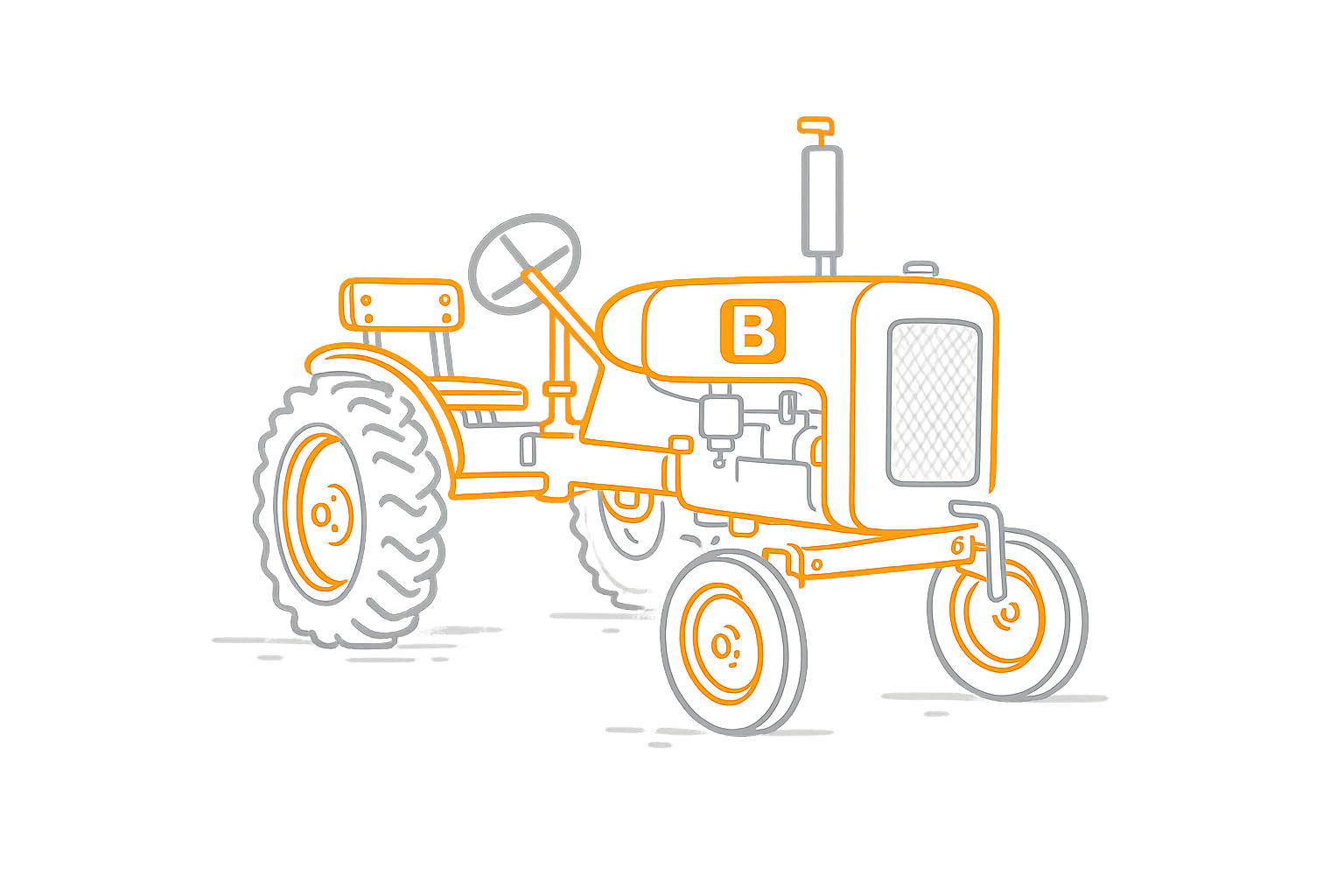
Inspired by the Allis-Chalmers Model B · 1937
No really — why the name Model B?
In 1937, Allis-Chalmers rolled the Model B off the line: a small, no-frills tractor painted Persian Orange, bright enough to spot across a field and tough enough to survive one. It wasn't their first machine, and it wasn't the biggest in the barn. It was the one built for the family farm; one skilled farmer could plow, plant, cultivate, and mow without hiring a crew. Over a hundred thousand farms said yes, and kept saying yes for twenty years, because the Model B was built to actually work.
We borrowed the name and the orange — on purpose.
This isn't our first rodeo, either. Our team has been building school apps for over six years, and digital tools for schools for more than fifteen. And we build the way Allis-Chalmers did: for the skilled operator in the seat. Model B isn't trying to be the flashiest tool in your stack. It's the one that shows up every morning, quietly does the work, and turns one capable person into a whole operation.
One operator. A whole operation.